
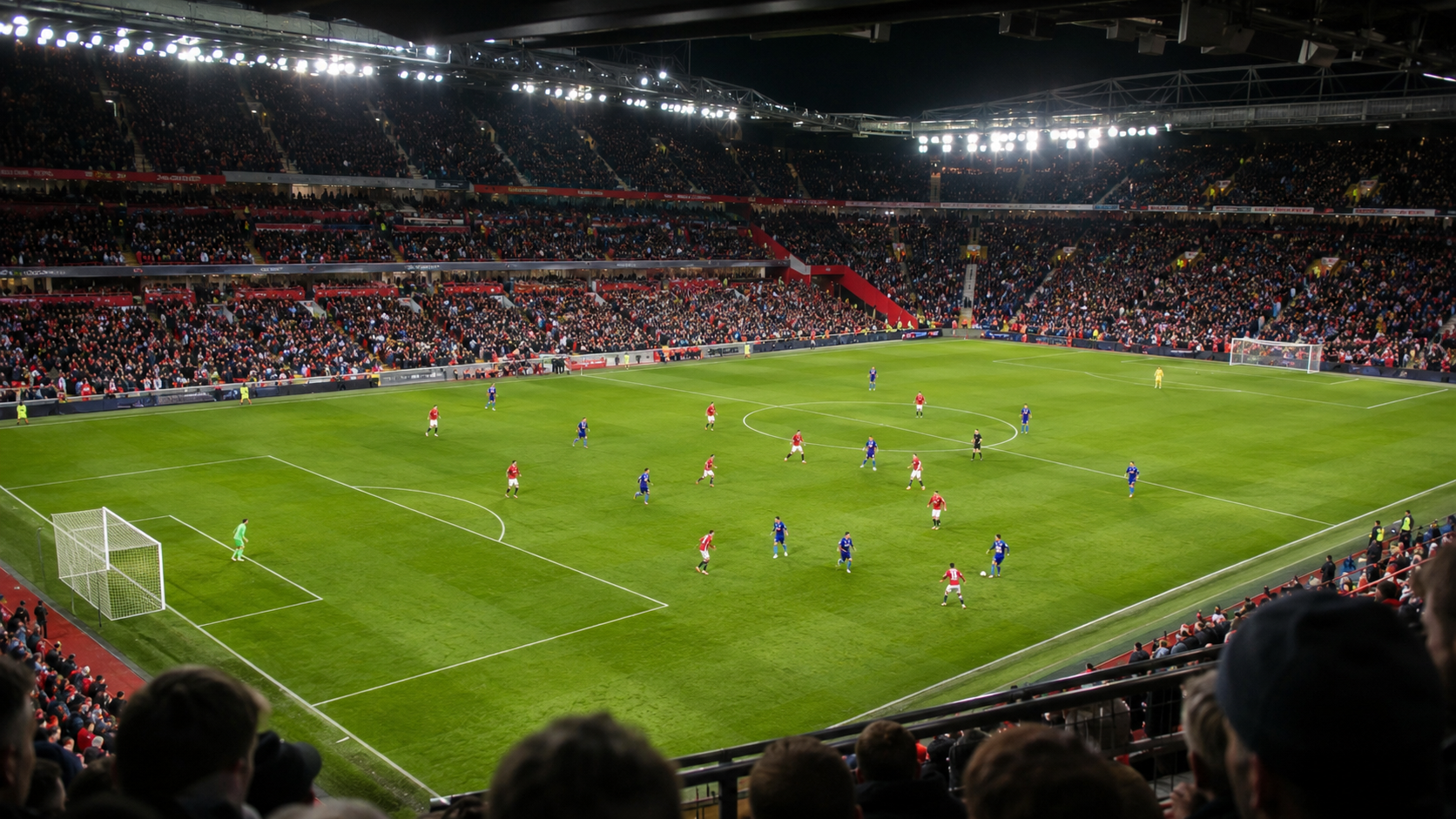
The Premier League has built its reputation on intensity, unpredictability and a distinctive football culture that attracts supporters from every corner of the world. Yet the real character of an English league match cannot always be understood through a short highlights package. A decisive goal may dominate the conversation, but the story behind it often begins much earlier, with a tactical adjustment, a pressing sequence or a moment of individual discipline. For supporters who want to experience the complete picture, смотреть полные матчи чемпионата Англии offers a way to follow the action beyond the most memorable incidents and appreciate how every phase contributes to the final result.
The Premier League Is a Competition of Constant Movement
One of the defining characteristics of English football is its pace. Matches frequently move through different rhythms, with periods of aggressive pressing followed by controlled possession, rapid counterattacks and carefully organised defensive phases. Even when one side appears to dominate, the balance can change after a single interception or a successful transition.
This constant movement makes the full ninety minutes particularly valuable. A team that begins confidently may gradually lose control of midfield. Another side might spend the opening half protecting its penalty area before discovering opportunities to attack the spaces left behind by an opponent. These developments are not always visible in a short summary, where the focus naturally falls on goals, major saves and controversial decisions.
Watching an entire match allows supporters to understand how momentum develops. It reveals the difference between a team that controls possession without creating meaningful chances and one that uses the ball with greater purpose. It also shows how managers respond when their original plans stop working.
The Premier League is especially interesting in this respect because its clubs approach the game in different ways. Some favour aggressive pressing and quick forward movement, while others prefer patient construction and positional discipline. Their contrasting philosophies create a competition in which tactical variety is just as important as individual quality.
Why the First Half Often Explains the Second
The opening forty-five minutes can provide essential context for everything that follows. Coaches use this period to test their opponents, identify weaknesses and determine which areas of the pitch offer the greatest opportunities.
A full match replay makes it easier to notice these early patterns. A winger may repeatedly move inside to create space for an overlapping full-back. A central midfielder might drop closer to the defenders to help build attacks under pressure. A forward may deliberately position himself between two defenders, forcing the opposition back line to make difficult decisions.
These movements can appear insignificant when viewed individually. Over time, however, they influence the entire structure of a match. One successful combination can encourage a team to repeat the same attacking pattern. A defensive mistake may persuade the opposition to concentrate its attacks on a particular area.
The second half often reflects the lessons learned during the opening period. Managers introduce substitutes, change formations or ask players to take greater risks. A side that struggled to create opportunities might begin attacking with more width, while a team protecting a narrow advantage could bring on an additional midfielder to strengthen its defensive structure.
Without the first half, these changes may seem sudden. With the complete match available, supporters can follow the reasoning behind them and understand how a contest gradually transforms.
The Importance of Work Away from the Ball
Football is frequently discussed through statistics that describe what happens when a player has possession. Goals, assists, completed passes and successful dribbles are easy to identify and compare. However, some of the most important contributions occur without the ball.
A striker who makes repeated runs may create space for a teammate even when he never receives a pass. A midfielder who closes a passing lane can prevent an opponent from starting a dangerous attack. A defender who maintains the correct distance from his partner may stop a forward from exploiting a gap.
These contributions become much easier to recognise when watching the entire field rather than concentrating only on the player carrying the ball. Full-match viewing encourages a broader understanding of football intelligence, including positioning, anticipation, communication and discipline.
It also gives greater appreciation to players whose work rarely appears in highlight compilations. Defensive midfielders, full-backs and centre-backs can influence the outcome through dozens of small decisions. Their performances may not produce spectacular moments, but they often provide the foundation for a team’s success.
This wider perspective changes the way supporters evaluate individual performances. Instead of judging a player solely by a goal or an error, viewers can consider how consistently he fulfilled his role throughout the match.
English Football and the Identity of Its Clubs
The Premier League is more than a collection of teams competing for points. Every club carries a particular history, local identity and relationship with its supporters. These traditions are expressed through stadium architecture, matchday rituals, songs, colours and the expectations surrounding each fixture.
A match at a historic ground can feel very different from a meeting between two clubs with newer stadiums and rapidly growing international audiences. Some supporters place particular importance on local rivalries and the memory of previous encounters. Others follow clubs because of their playing philosophy, famous managers or generations of influential footballers.
The atmosphere surrounding English football is therefore an essential part of its appeal. Crowd reactions can change the emotional character of a contest. A successful tackle may receive a response almost as enthusiastic as a goal, while a late equaliser can transform the mood of an entire stadium.
Watching the full match helps preserve this atmosphere. The quieter periods, moments of tension and reactions to unexpected events all contribute to the experience. They show that football is not simply a sequence of decisive incidents but a shared event shaped by players and supporters alike.
Tactical Preparation and the Influence of Managers
Modern Premier League managers operate in an environment where opponents study one another in considerable detail. Preparation involves analysing previous matches, identifying patterns and designing strategies that can exploit specific weaknesses.
Some teams use a high defensive line to keep the opposition away from their own penalty area. Others prefer a deeper structure, inviting pressure before attempting to counterattack. The effectiveness of these approaches depends on timing, coordination and the ability of players to recognise changing situations.
A full ninety-minute recording can reveal how these ideas work in practice. It allows viewers to observe whether a pressing system remains organised throughout the match, how a defensive line reacts to diagonal runs and whether a team can maintain its shape after losing possession.
Substitutions also deserve attention. A replacement may be introduced to increase attacking speed, protect a lead or provide additional physical strength in midfield. Sometimes the most important change is not the identity of the player but the position he occupies and the instructions he receives.
This tactical perspective makes replays useful not only for dedicated supporters but also for aspiring players and coaches. Studying complete matches can provide practical examples of movement, spacing, decision-making and collective organisation.
Technology Is Changing the Way Football Is Played and Watched
Technology now influences nearly every stage of professional football, from preparation and performance analysis to match officiating and digital viewing. Video analysis systems help coaching staff examine positioning, pressing intensity and passing patterns. GPS tracking and performance data provide information about players’ physical workloads, helping clubs manage fitness and recovery.
On the pitch, technologies such as VAR and goal-line systems have changed how certain decisions are reviewed. They do not eliminate every debate, but they provide additional tools for officials when judging important incidents. Their presence has also encouraged supporters to pay closer attention to the details of individual decisions.
The viewing experience has developed as well. Modern streaming platforms use adaptive video quality to accommodate different internet connections, while replay controls allow viewers to revisit important passages of play. Better screens and mobile devices make it easier to follow matches in different environments, although the quality of the experience still depends on the reliability of the connection and the available video source.
For football audiences, these developments create more opportunities to study the game rather than simply watch its final score. Technology is becoming part of a wider relationship between supporters, analysis and the sport itself.
Rivalries That Gain Meaning Over Time
The Premier League’s most memorable fixtures are often shaped by history as much as by current league positions. Rivalries between neighbouring clubs, former title contenders and teams with contrasting football traditions give individual matches an additional emotional dimension.
The significance of a fixture may be influenced by previous meetings, a controversial decision from an earlier season or a dramatic result that supporters still remember years later. These details create expectations before the players even enter the pitch.
A full match replay can help explain why certain encounters carry such intensity. It shows how the teams approach one another, whether previous tactical problems have been addressed and how players respond when the atmosphere becomes increasingly demanding.
Rivalries also demonstrate how football narratives develop across seasons. A young player may become an important figure after a decisive performance, while a manager’s approach to a particular opponent can become a recurring subject of discussion. Watching matches in their entirety helps connect these individual stories to the broader history of the competition.
A More Complete Way to Appreciate the Game
Short highlights remain useful when time is limited. They provide a quick overview of the most important moments and make it easy to follow several competitions. However, they cannot fully reproduce the rhythm, uncertainty and tactical complexity of a complete football match.
The ninety-minute format offers something different. It gives viewers time to understand how teams organise themselves, how players contribute without possession and how a manager’s decisions influence the course of an encounter. It also preserves the atmosphere that surrounds the action, including the tension of a close contest and the collective response to a dramatic moment.
English football continues to attract a global audience because it combines competitive intensity with a remarkable variety of playing styles and club traditions. Every fixture has its own character, and even a match without a spectacular scoreline can contain valuable tactical lessons and memorable individual performances.
For supporters who want more than a collection of goals, complete match viewing offers a richer connection with the Premier League. The final whistle may determine the result, but the full story is written through every pass, movement, challenge and decision that comes before it.